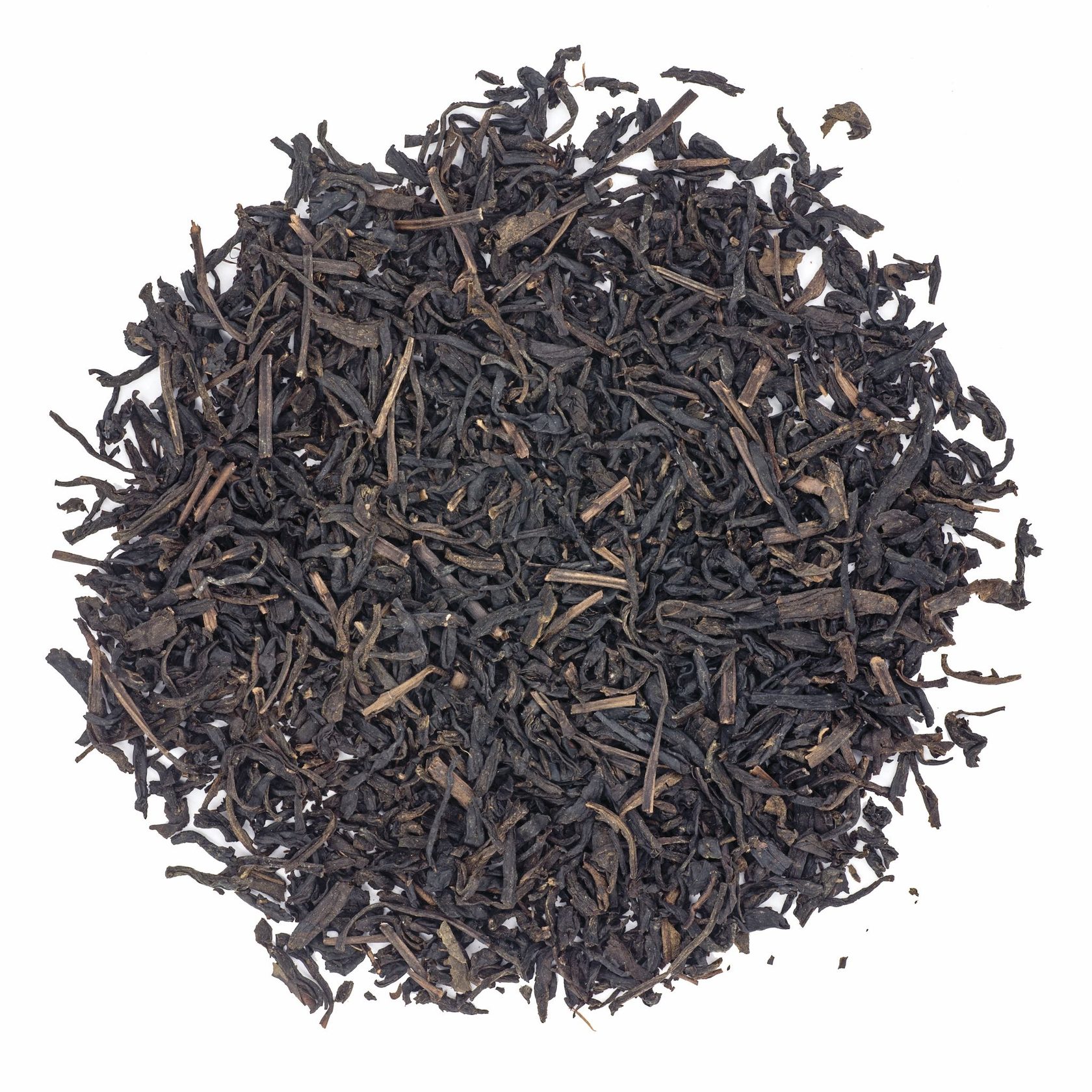
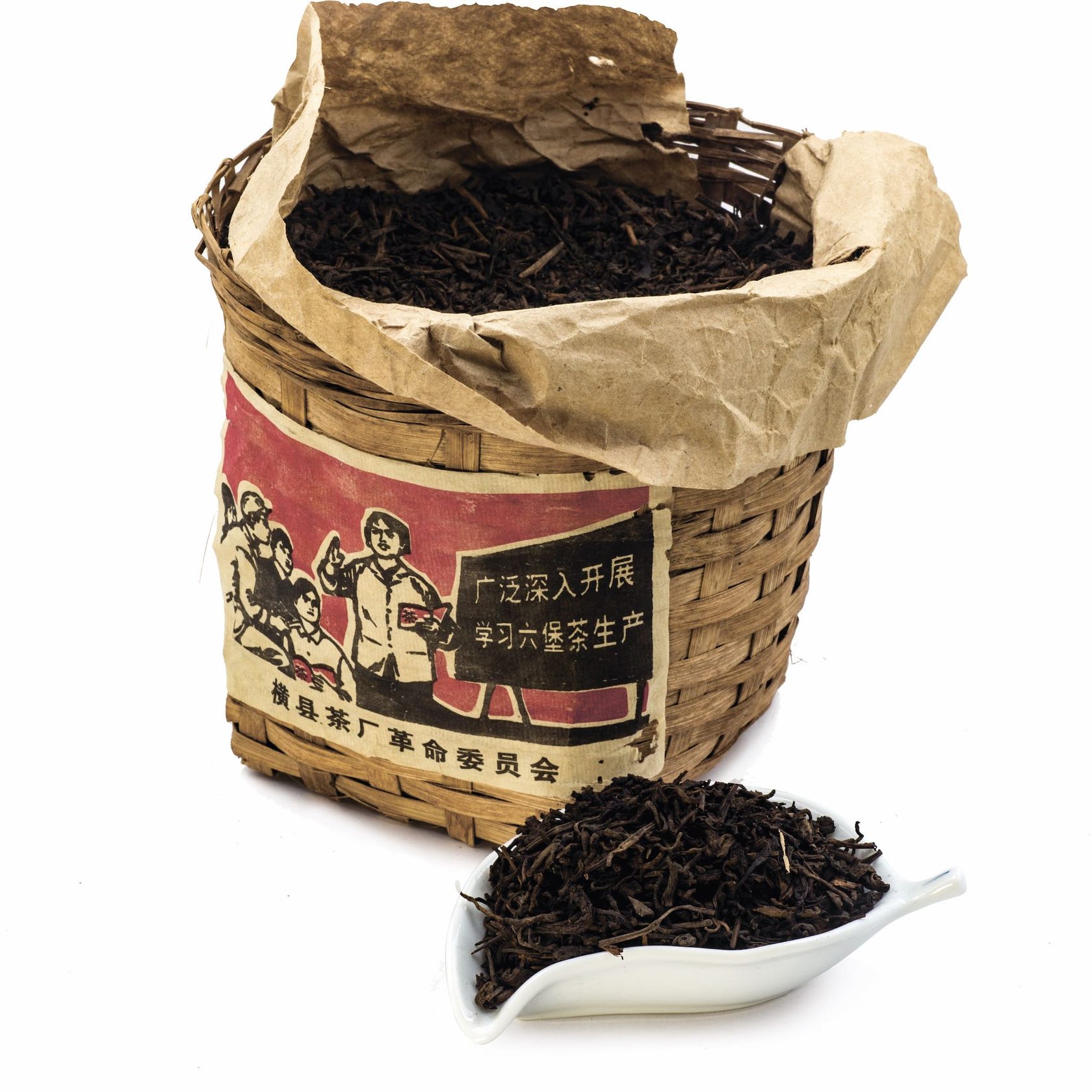
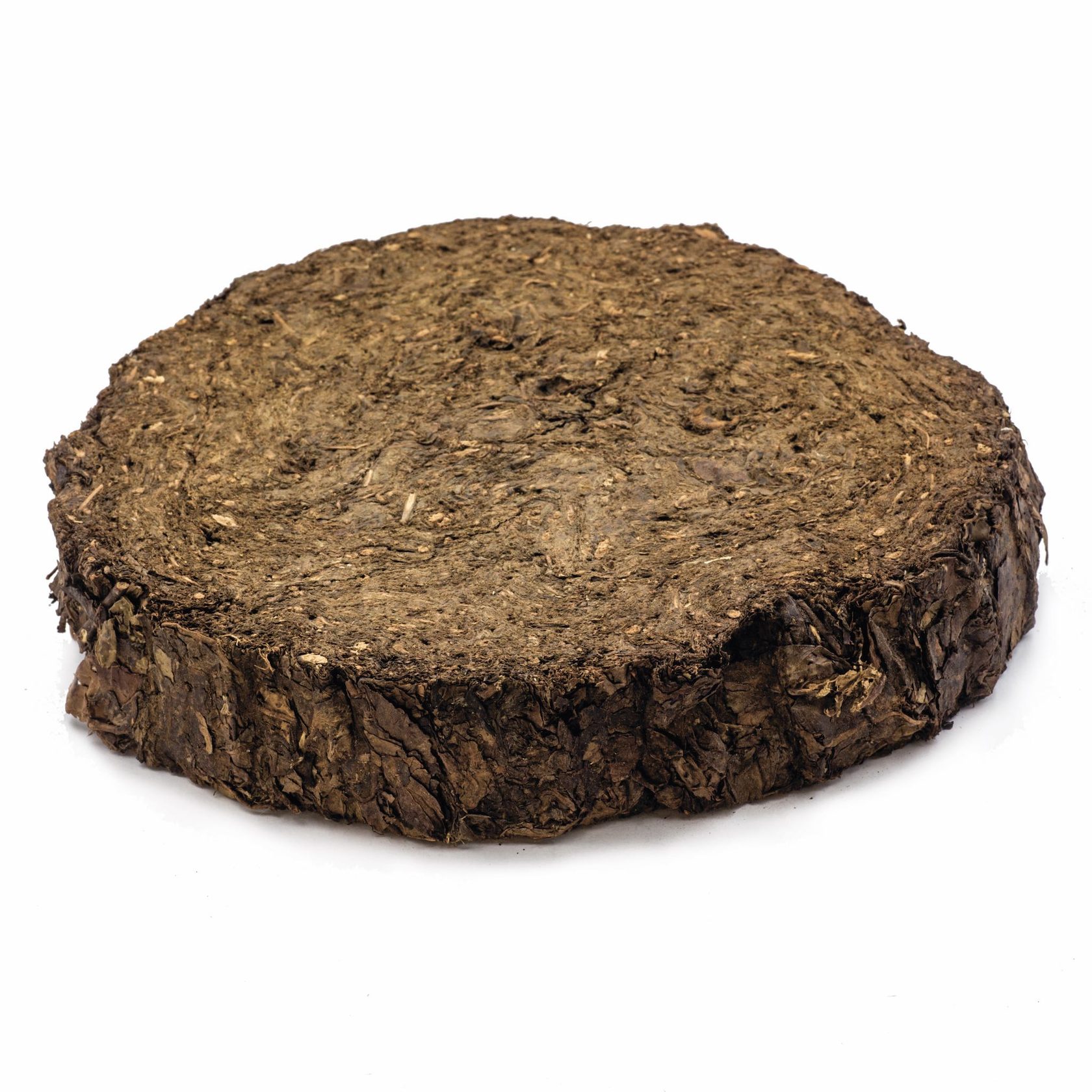
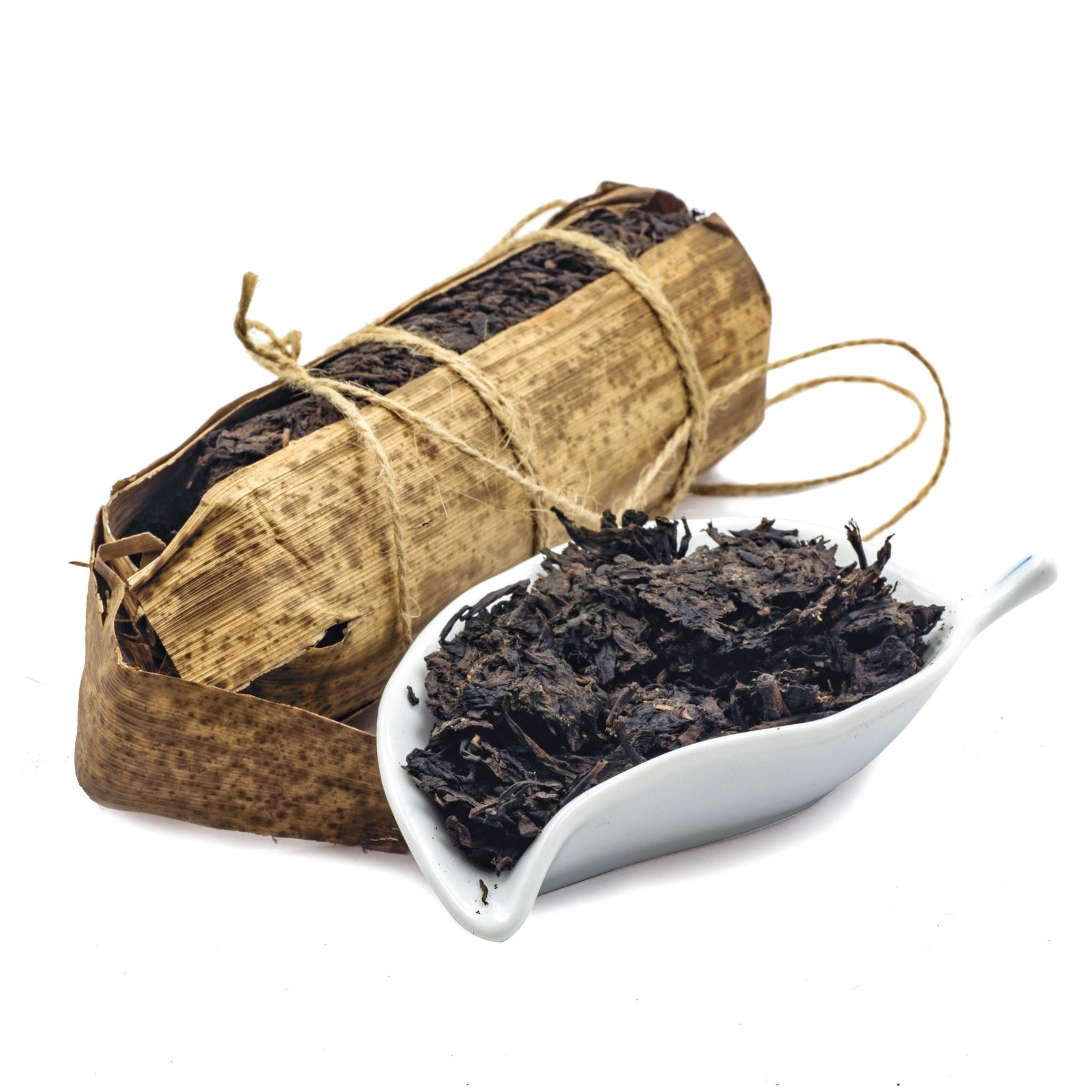
Dark tea · Hunan
Anhua Heicha
安化黑茶
The great dark tea of Hunan — the leaf behind the brick and the famous "golden flower" fungus. Piled, fermented and pressed for the old tea-horse trade to the northwest, it brews smooth, earthy and warming.
- Region
- Anhua county, Yiyang, Hunan — 400–800 m
- Harvest
- Spring through autumn; pressed and aged
- Oxidation
- Post-fermented (piled, then aged)
- Cultivar
- Hunan broad-leaf bushes
In the cup
Earth, aged wood and dried jujube, with a soft sweetness and, in fuzhuan styles, a mellow fungal richness — thick and round, never harsh.
What it gives
A warming, digestive tea — long drunk by the herding peoples of the steppe to cut through fat and dairy, gentle and settling on the stomach.
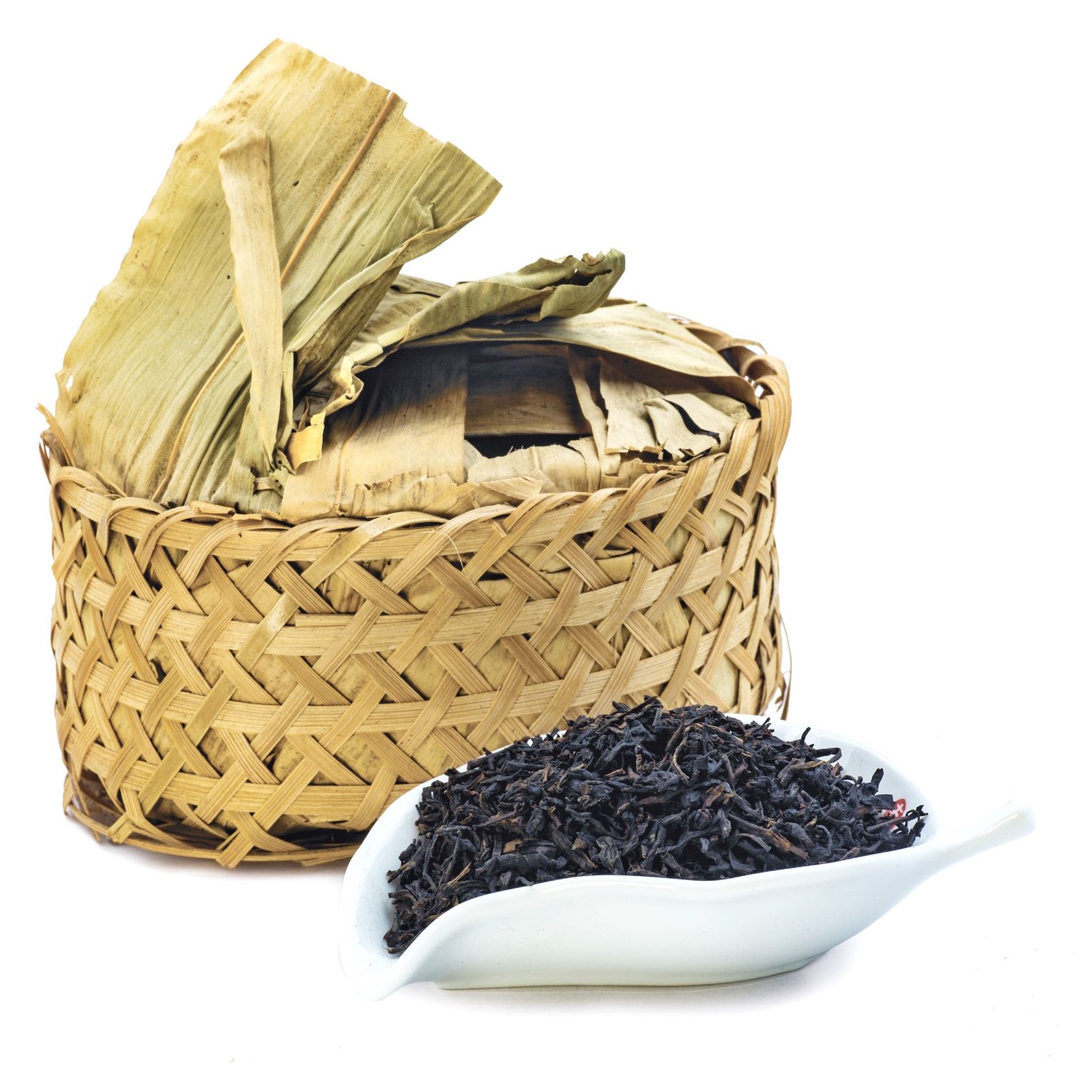
Anhua Heicha — the dark tea of Anhua in Hunan — is one of the oldest and most important of the hēichá family, the leaf behind much of China’s pressed brick tea. For centuries it travelled the tea-horse roads to the northwest and the steppe, where herding peoples brewed it strong with milk and salt as a daily necessity, not a luxury.
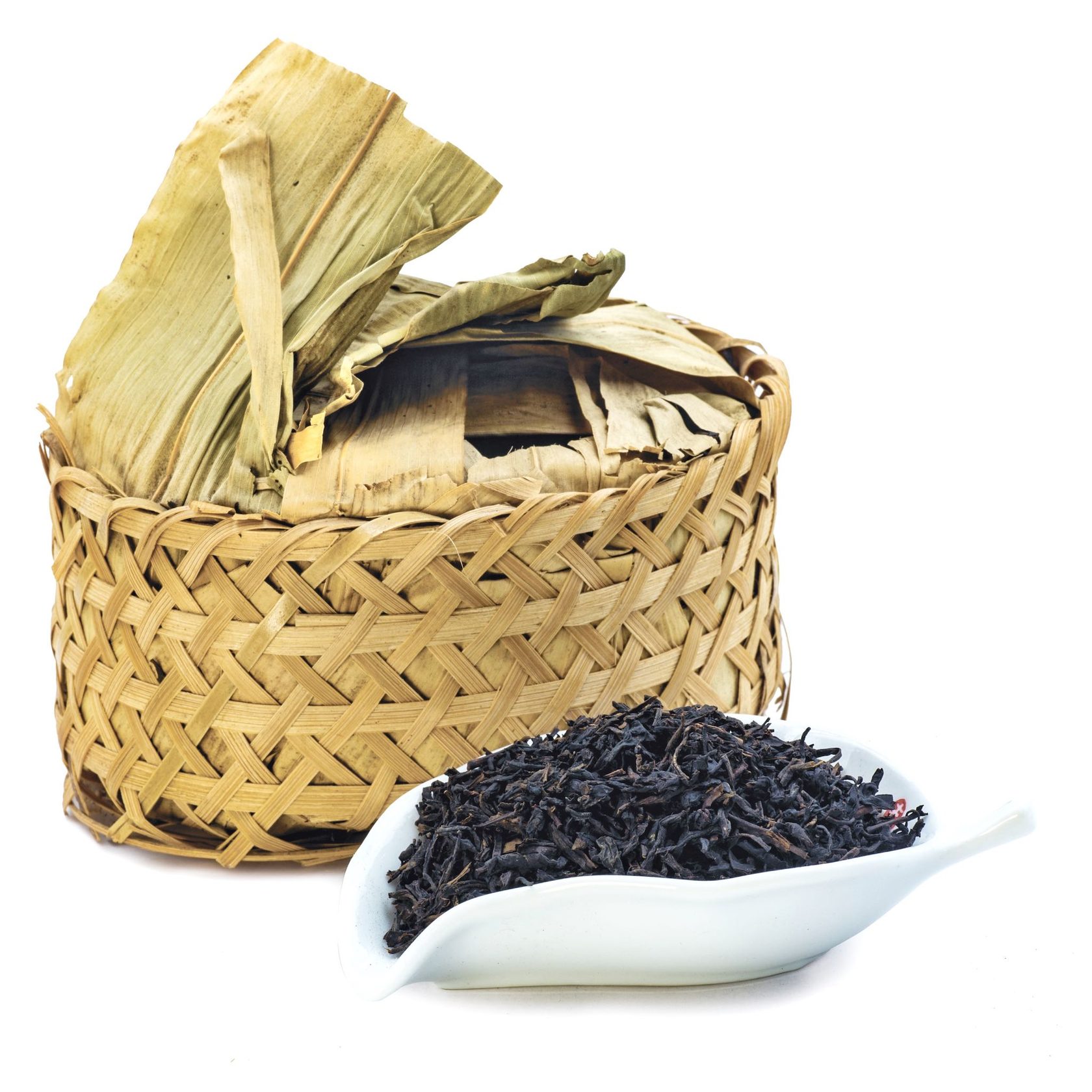
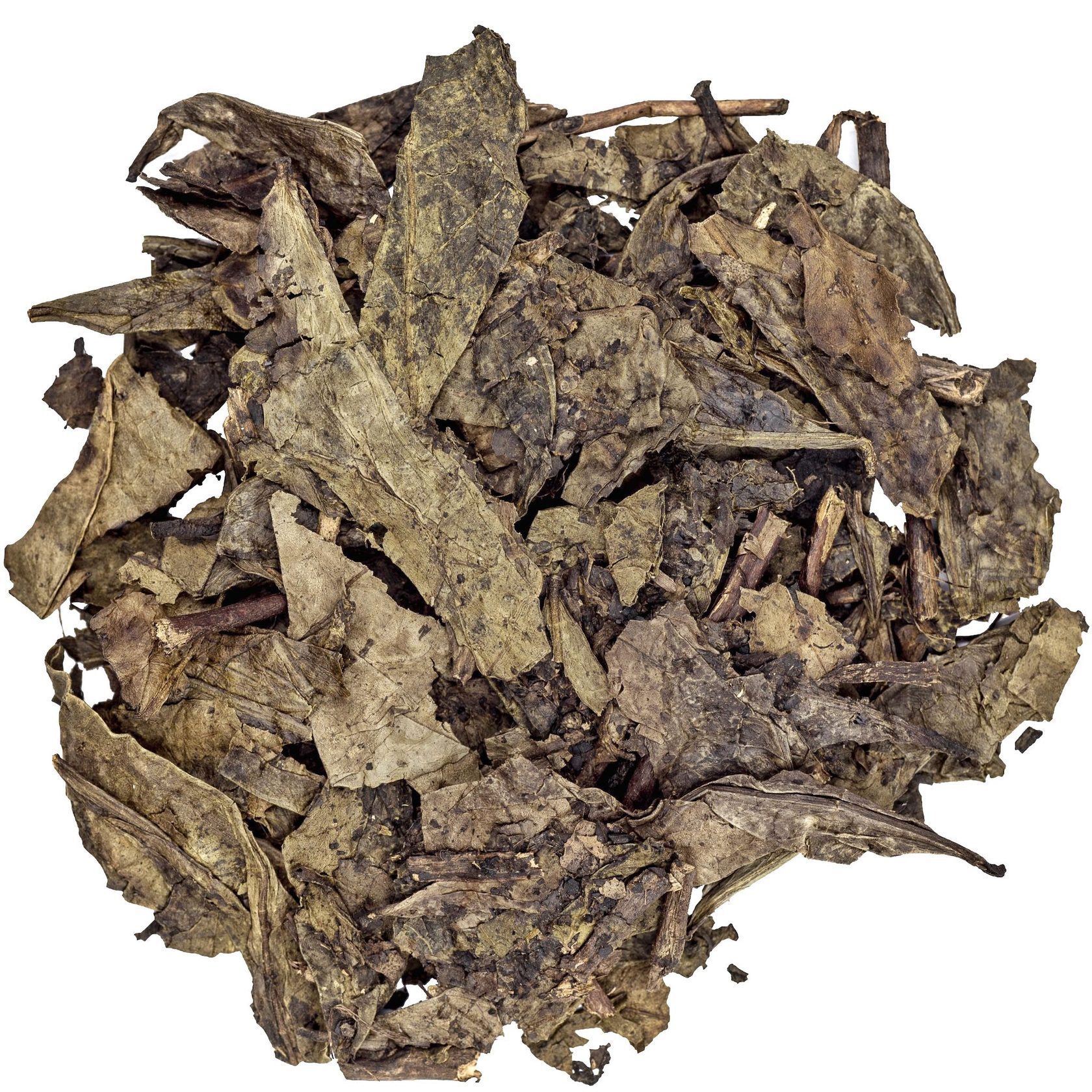
Its making is a true post-fermentation. The leaf is piled warm and damp to ferment, wòduī, then pressed into bricks, baskets and the famous qiānliǎng logs, and aged. One Anhua tradition deliberately cultivates a golden fungus, jīnhuā — Eurotium cristatum, the “golden flower” — within fuzhuan brick, which lends a distinctive mellow, almost mushroomy sweetness.
In the cup
Rinse it first to wake the leaf, then brew boiling and short. The liquor is deep red-brown, the body thick and smooth, the flavour of earth, aged wood and dried jujube with a soft, settling sweetness. It is the tea to reach for after a rich meal, or brewed long and strong on a cold day.
How to brew
Anhua Heicha
Water
100 °C — full boil
Leaf
6 g per 100 ml
Steep
Rinse, then 10–20 s, many steeps
Vessel
Gaiwan or clay pot